






In 2021, if you asked a random person what “blockchain” meant, they would probably start rambling about pixelated monkeys, laser-eyed Twitter profile pictures, and “moon” shots. It was a digital circus—half technological breakthrough, half gold-rush hysteria. But as we navigate through 2026, that neon-lit fog has finally cleared. What’s left behind isn’t a speculative toy, but something much more industrial, quiet, and honestly, a bit boring.
And that’s a good thing.
Blockchain isn’t just “the future” in a vague, sci-fi sense anymore. It has transitioned into the digital plumbing of our modern economy. It’s the infrastructure you don’t necessarily see, but you’d definitely notice if it failed. We are moving away from the era of “crypto” and into the era of “on-chain utility.”
The Death of the Hype Cycle
The most successful blockchain projects in 2026 are the ones you don’t even realize are using the technology. When you transfer money across a border in three seconds for a fraction of a cent, or when you scan a QR code on a bottle of medicine to ensure it isn’t a counterfeit, a distributed ledger is likely humming in the background.
The question for businesses today isn’t whether blockchain will exist; it’s whether they can afford to remain on legacy systems while their competitors move to high-speed, automated rails. This is exactly why blockchain app development services have seen a massive pivot. They are no longer just minting speculative tokens; they are building modular architectures for global supply chains, decentralized identity protocols for healthcare, and automated treasury systems for multinational corporations.

The Pragmatic Audit: Main Benefits of Blockchain
To understand why this tech is finally “winning,” we have to strip away the marketing fluff and look at the actual operational math. If we look at the main benefits of blockchain in 2026, it really boils down to three core pillars: Verifiable Trust, Radical Transparency, and Compressed Time.
1. Trust Without the “Middleman Tax”
In the old world, if two parties didn’t know each other, they needed a massive, expensive “trust bridge”—a bank, a notary, or a central clearinghouse. Blockchain replaces that bridge with code. By using a distributed ledger, every participant in a network has the same version of the truth at the same time. The math acts as the referee, which removes the need for manual reconciliation.
2. Immutability as a Legal Shield
Once a transaction is hashed and written to a block, it is effectively carved in digital stone. You cannot “accidentally” delete a record, back-date a contract, or edit a ledger entry without the entire network noticing. For industries like real estate or high-stakes logistics, this immutability isn’t just a feature; it’s a massive reduction in legal liability and fraud.
3. The Automation of the “If/Then” (Smart Contracts)
This is where the real magic happens. We’ve finally moved past simple transfers and into programmable value. Imagine a cargo ship entering a port. The moment its GPS coordinates hit a specific “geo-fence,” a smart contract triggers an insurance payout for the delay, releases funds to the shipping crew, and updates the inventory of a warehouse 500 miles away—all without a single human having to sign a piece of paper or make a phone call.
The Collision: AI Meets the Ledger
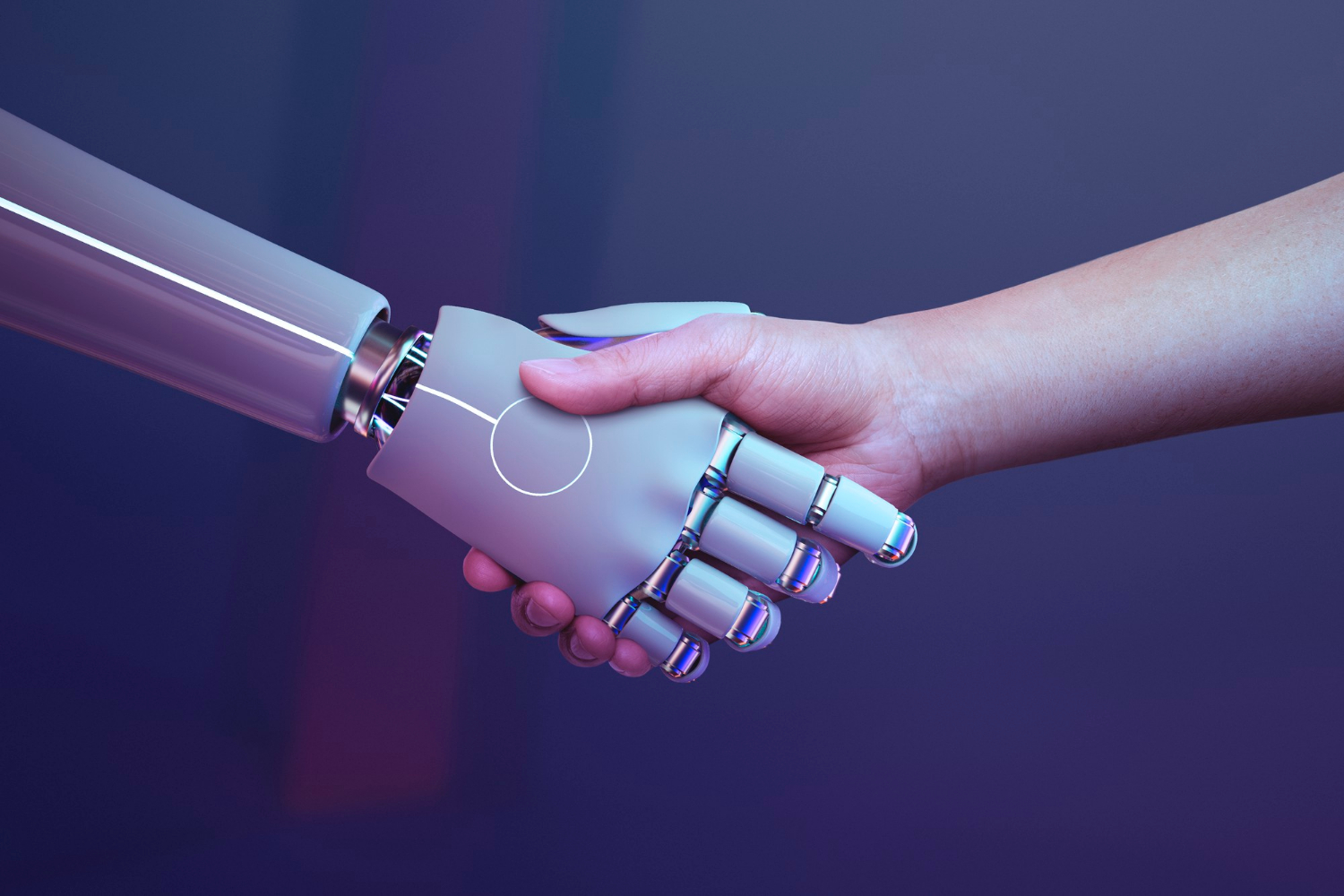
One of the most fascinating shifts in 2026 is how blockchain has become the “OS” for Artificial Intelligence. We are entering the age of Agentic AI, where autonomous bots are beginning to act as independent economic players.
An AI-driven delivery drone or a data-scraping bot doesn’t have a social security number or a credit card. It needs a way to pay for its own repairs, server space, and electricity. It needs a digital wallet. Blockchain provides the economic framework for these non-human actors. It also provides a “trail of breadcrumbs” for us humans to audit what an AI did, where it got its data, and whether it followed its programmed constraints. Without a transparent, unchangeable ledger, a world full of autonomous AI would be an un-auditable nightmare.
RWA: Bringing the Real World On-Chain
If you want to see where the big money is moving, look at Real-World Asset (RWA) tokenization. In 2026, we are seeing trillions of dollars in “offline” assets—bonds, commercial real estate, gold, and even private equity—being chopped up into digital tokens.
Why? Liquidity. If you own a $50 million office building, it’s hard to sell 1% of it to pay your bills. But if that building is tokenized on a blockchain, you can trade 1% of your ownership in seconds on a global market. This “fractionalization” is unlocking capital that has been trapped in illiquid assets for centuries.
The Reality Check: It’s Not All Sunshine
I won’t stand here and tell you the transition is perfect. We are still dealing with “clunky” user interfaces, and the regulatory landscape is still being written in real-time. There’s a steep learning curve, and the transition from legacy databases to decentralized ones can be a massive headache for IT departments.
However, the “cost of doing nothing” is rising. In 2026, the companies that are winning aren’t the ones trying to “disrupt” the world with a new coin; they are the ones using blockchain to shave 3% off their operational costs or 48 hours off their settlement times.
Is it the Future? No, it’s the Present.
The word “future” implies something that is yet to happen. But look around. The world’s largest banks are already using JPM Coin for internal settlements. Global shipping giants like Maersk have already proved the value of on-chain provenance. Governments are already piloting digital currencies to streamline tax collection and welfare distribution.
The “crypto winter” of the early 20s was the best thing that ever happened to the technology. It froze out the scammers and forced the real builders to focus on utility. Now, we’re seeing the harvest of that labor.
Blockchain isn’t a magic wand. It won’t solve every problem in your business. But in a world that is becoming increasingly digital, autonomous, and fast-paced, it provides the only thing that actually matters: a foundation of truth that everyone can agree on.
If you’re still waiting for “the right time” to look into this technology, you’re already behind. The plumbing is being laid right now. The question is, will you be connected to it, or will you be left holding a paper ledger in a digital world?