






Why Start a Home Workout Routine?
Starting a fitness journey can feel challenging, especially if you have never exercised regularly. However, you do not need a gym membership or expensive equipment to improve your health. A home workout routine for beginners offers a convenient and affordable way to become more active while building confidence.
Working out at home allows you to exercise at your own pace. You can choose a schedule that fits your daily routine and gradually increase your fitness level. Most importantly, consistency matters more than intensity when you are just getting started.
Prepare Before You Begin
Choose a Comfortable Workout Space
Select an area with enough room to move freely. A clean, well-ventilated space helps you stay comfortable during your workout. If possible, use a yoga mat or exercise mat for added support during floor exercises.
Wear Comfortable Clothing
Choose breathable clothing that allows easy movement. Supportive athletic shoes can also help reduce pressure on your feet and improve stability during standing exercises.
Start Every Session with a Warm-Up
Increase Blood Flow
A proper warm-up prepares your muscles and joints for exercise. It also reduces the risk of injury and improves flexibility.
Spend five to ten minutes performing light movements such as:
- Marching in place
- Arm circles
- Shoulder rolls
- Hip rotations
- Gentle leg swings
- Light jumping jacks
Keep the pace comfortable and focus on moving your entire body.
Perform Basic Strength Exercises
Bodyweight Squats
Squats strengthen your legs, hips, and core muscles. Stand with your feet shoulder-width apart. Lower your body slowly as if sitting in a chair, then return to the starting position.
Begin with 10 to 12 repetitions.
Wall Push-Ups
Wall push-ups are an excellent beginner alternative to traditional push-ups. Stand facing a wall and place your hands slightly wider than shoulder width. Bend your elbows and slowly move your chest toward the wall before pushing yourself back.
Complete 10 to 15 repetitions.
Glute Bridges
Lie on your back with your knees bent and your feet flat on the floor. Lift your hips until your body forms a straight line from your shoulders to your knees. Hold briefly before lowering your hips slowly.
Repeat the movement 12 times.
Bird Dog Exercise
Start on your hands and knees. Extend one arm forward while stretching the opposite leg backward. Hold for a few seconds before returning to the starting position.
Alternate sides and perform 10 repetitions for each side. This exercise improves balance and strengthens your core.
Add Simple Cardio Exercises
March in Place
Marching in place raises your heart rate without putting excessive stress on your joints. Swing your arms naturally while lifting your knees comfortably.
Continue for one to two minutes.
Step-Ups
If you have a sturdy step, use it for step-up exercises. Step up with one foot, bring the other foot up, then step back down carefully.
Alternate your leading foot and continue for one minute.
Low-Impact Jumping Jacks
If traditional jumping jacks feel difficult, perform a low-impact version by stepping one foot out at a time while raising your arms overhead.
This variation provides cardiovascular benefits while remaining beginner-friendly.
Strengthen Your Core
Modified Plank
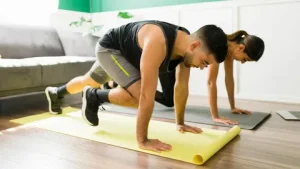
Place your forearms on the floor and keep your knees on the ground. Maintain a straight line from your shoulders to your knees while tightening your abdominal muscles.
Hold the position for 20 to 30 seconds.
Dead Bug Exercise
Lie on your back with your arms extended toward the ceiling and your knees bent at 90 degrees. Slowly lower one arm and the opposite leg toward the floor before returning to the starting position.
Repeat on the opposite side for 10 repetitions each.
Cool Down After Every Workout
Stretch Your Muscles
Cooling down helps your body recover and reduces muscle tightness. Spend five to ten minutes performing gentle stretches for your legs, arms, shoulders, chest, and back.
Hold each stretch for 20 to 30 seconds without bouncing.
Practice Deep Breathing
Finish your workout with slow, deep breaths. Inhale through your nose and exhale through your mouth. Controlled breathing helps your heart rate return to normal while promoting relaxation.
Create a Weekly Workout Schedule
Build a Consistent Routine
Beginners should aim to exercise three to five days each week. Allow your body time to recover between strength-training sessions.
A simple weekly schedule may include:
- Monday: Full-body workout
- Tuesday: Light walking or stretching
- Wednesday: Full-body workout
- Thursday: Rest or gentle yoga
- Friday: Full-body workout
- Saturday: Light cardio activity
- Sunday: Rest and recovery
Consistency will help you develop healthy habits and improve your fitness over time.
Tips for Long-Term Success
Progress Gradually
Do not rush your fitness journey. Increase repetitions, workout duration, or exercise difficulty slowly as your strength improves. Small improvements lead to lasting results.
Stay Hydrated
Drink water before, during, and after your workout. Proper hydration supports energy levels and helps your body recover more efficiently.
Listen to Your Body
Some muscle soreness is normal when starting a new routine. However, stop exercising if you experience sharp pain or significant discomfort. Give your body enough rest to recover between sessions.
Stay Motivated Throughout Your Journey
Building a new habit takes patience. Set realistic goals and celebrate each milestone, no matter how small. Tracking your progress can help you stay motivated and recognize your improvements over time.
Remember that every workout brings you one step closer to better health. Even short sessions contribute to long-term fitness when performed consistently.
Conclusion
A home workout routine for beginners provides a simple and effective way to improve your health without leaving the house. By combining strength exercises, light cardio, core training, and proper stretching, you can build a strong foundation for lifelong fitness. Stay consistent, progress at your own pace, and focus on developing healthy habits. Over time, these small daily efforts will lead to greater strength, improved endurance, and increased confidence in your fitness journey.


