






Technology continues to reshape how people work, communicate, learn, and solve problems. Among the biggest developments, artificial intelligence has moved from a specialized technology into a tool that businesses, students, researchers, and everyday users can access.
The pace of development also continues to accelerate. New models can understand text, images, audio, video, and increasingly complex instructions. At the same time, businesses are exploring AI agents that can complete multi-step tasks rather than simply answer questions.
This progress creates exciting opportunities. However, it also raises important questions about employment, privacy, security, education, and responsible technology use. Understanding where the technology may go next can help individuals and businesses prepare for a changing digital environment.
AI Will Become More Useful in Everyday Work
One of the biggest changes will involve everyday productivity. Many people already use AI to draft emails, summarize documents, organize information, generate ideas, and analyze data. Future systems will likely handle more connected tasks. Instead of asking an AI assistant to complete one action, users may give it a broader goal.
For example, a business owner could ask an AI assistant to review customer inquiries, identify urgent requests, prepare responses, and organize follow-up tasks. The employee would then review the work before taking action. This shift could reduce repetitive workloads. It may also allow people to spend more time on strategy, creativity, and customer relationships.
AI Agents Could Transform Business Operations
AI agents represent an important direction for the future. Traditional chatbots usually respond to individual prompts. Agent-based systems aim to understand goals, plan multiple steps, use connected software, and complete tasks with less constant instruction. Research from McKinsey describes agentic AI as a major development that could change how organizations approach workflows and automation.
For businesses, this could mean automated support for sales, customer service, administration, research, and operations. However, companies will need strong controls. An autonomous system should not receive unlimited access to sensitive data or critical business functions. Human oversight, permissions, monitoring, and clear boundaries will remain essential.
Education Will Change With Personalized Learning
Education could experience another major transformation. Students progress at varying rates and frequently face challenges with various ideas. AI tutors can provide explanations, practice questions, feedback, and learning activities based on individual needs. A student who struggles with algebra, for example, could receive additional practice focused on specific areas of difficulty.
Teachers could also use AI to create lesson ideas, summarize learning materials, and develop practice exercises. Nonetheless, technology ought to assist educators instead of substituting them. Education involves motivation, empathy, discussion, and social development. Human educators provide qualities that automated systems cannot fully reproduce.
Healthcare Could Benefit From Better Data Analysis
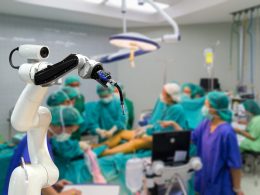
Healthcare represents another area with significant potential. Medical professionals deal with enormous amounts of information, including clinical records, research papers, medical images, and test results. AI systems can help analyze information and identify patterns that might deserve further attention. Researchers can also use artificial intelligence to accelerate parts of drug discovery and biomedical research.
The future could bring more personalized healthcare as systems combine different types of patient information to help professionals understand individual risks and treatment options. Yet healthcare requires exceptional caution. Errors can have serious consequences. Medical professionals must verify AI-generated recommendations and remain responsible for clinical decisions.
Creative Industries Will Continue to Evolve
AI has already changed creative work. People can generate images, music, videos, scripts, and written content with increasingly accessible tools. The future will likely bring even more sophisticated creative systems. A small team could potentially produce advertising campaigns, animated videos, product visuals, and other media with fewer technical resources.
This does not imply that human creativity will vanish. Instead, creative professionals may shift toward directing, editing, storytelling, and developing original concepts. The ability to decide what should be created could become just as important as the ability to create it.
At the same time, copyright, ownership, consent, and attribution will remain important issues. Creative industries need clear standards that protect both innovation and creators.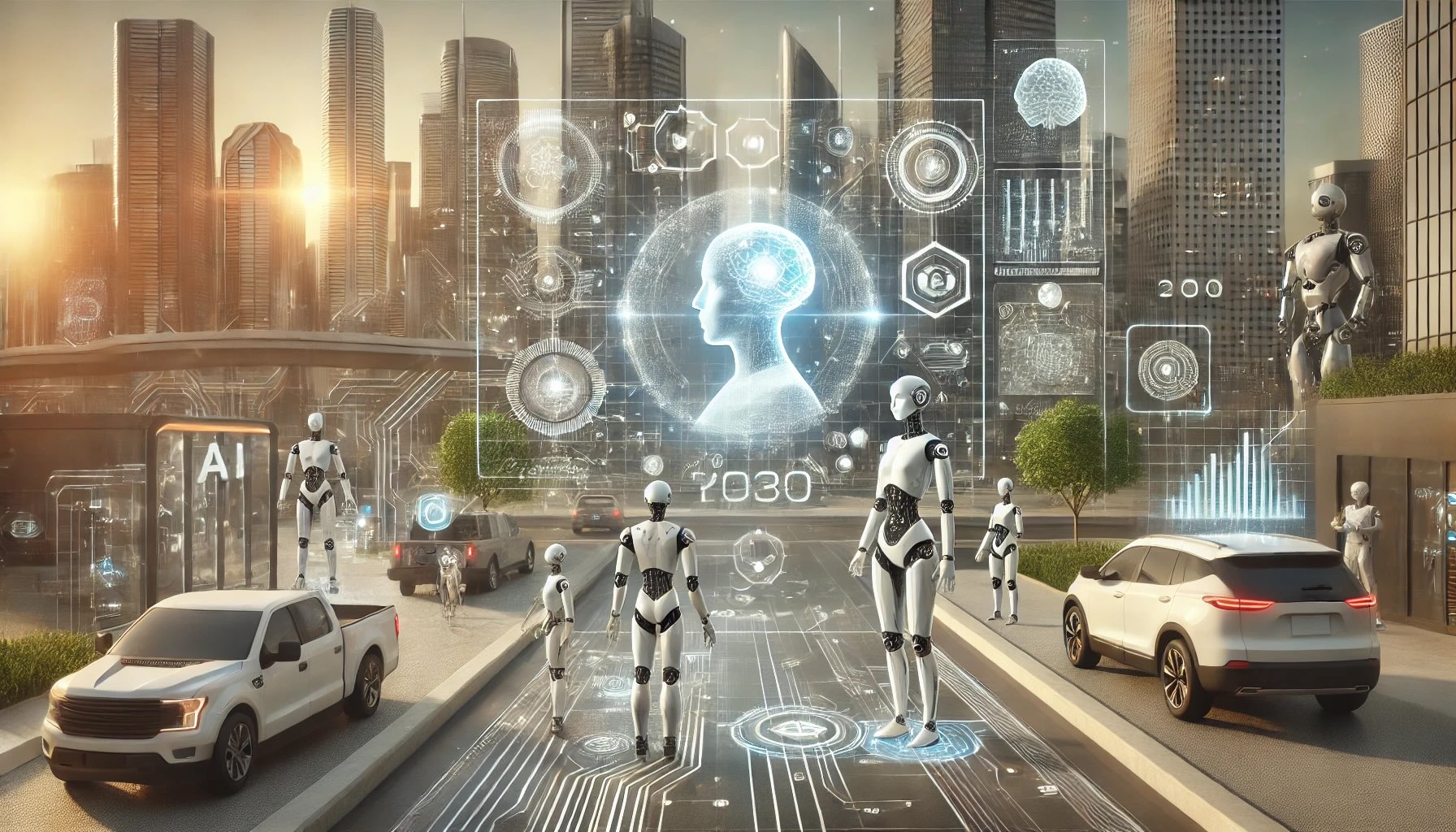
Jobs Will Change Rather Than Simply Disappear
Employment remains one of the most debated topics surrounding AI. Some tasks will become automated, especially repetitive activities involving predictable processes. However, automation can also create new roles. Businesses may need people who manage AI systems, evaluate outputs, design workflows, monitor risks, and develop new applications.
The World Economic Forum’s Future of Jobs research highlights both technological disruption and the growing importance of skills such as analytical thinking, creativity, resilience, and technological literacy. Therefore, workers should focus on continuous learning. Developing technical skills can help, but communication, critical thinking, creativity, and problem-solving will remain valuable.
AI Will Require Stronger Cybersecurity
As AI becomes more capable, security challenges will also grow. Criminals can use AI to create convincing scams, automate attacks, or discover vulnerabilities. Businesses will therefore need stronger security practices. They may also use AI to identify suspicious activity and respond to threats faster.
Security teams should not assume that an AI system will automatically protect an organization. Human monitoring and well-designed security procedures still matter. Companies should also control who can access AI systems and what information those systems can process.
Privacy Will Become More Important
AI systems frequently rely on extensive amounts of data. This creates questions about how companies collect, store, process, and use personal data. Consumers increasingly want to know what happens to their information. Businesses that provide clear explanations and responsible data practices can build stronger trust.
Privacy regulations will also influence how organizations deploy AI. Companies need to understand the rules that apply to their industry and location. Responsible data management should become part of AI planning from the beginning rather than an afterthought.
Regulation and Responsible Development
As AI capabilities expand, governments and organizations are developing rules and frameworks to manage potential risks. The European Union’s AI Act represents one of the most significant regulatory efforts. It establishes a risk-based framework for different types of AI systems.
Regulation will likely continue evolving as technology changes. Businesses should therefore monitor relevant requirements and establish internal policies for responsible AI use. These policies can cover data protection, human oversight, accuracy, transparency, and acceptable use.
Human Skills Will Still Matter
The growth of AI does not make human abilities less important. In many situations, it makes them more valuable. People need to evaluate information, recognize mistakes, understand context, and make ethical decisions. They also need to communicate effectively with customers and colleagues.
Artificial Intelligence can generate several possible solutions. A person still needs to decide which solution makes sense. This means future workers may benefit from combining technology skills with human strengths.
Preparing for the Future
Businesses and individuals do not need to predict every technological development. Instead, they can prepare by building adaptable skills.
Start by learning how AI works at a basic level. Experiment with useful tools and understand their limitations. Then identify tasks where AI can save time without creating unnecessary risks.
Businesses should also create clear policies. Employees need to know when they can use AI, what information they can share, and when human review is required. Small experiments can provide useful lessons before organizations make larger investments.
Final Thoughts
The future of artificial intelligence will involve much more than chatbots and content generators. AI agents, personalized education, healthcare applications, creative technologies, automation, and advanced data analysis could reshape many areas of everyday life. However, progress will also create challenges. Privacy, cybersecurity, employment, copyright, accuracy, and regulation will require careful attention.
The most successful approach will combine technological progress with human judgment. People should use AI to extend their abilities rather than surrender important decisions to automated systems.
As the technology develops, learning and adaptation will become increasingly important. Individuals who understand both the possibilities and limitations of intelligence can make better decisions about how to use it.
The future will not simply belong to AI. It will belong to people who learn how to work with it responsibly, creatively, and thoughtfully.