







Technology has changed the way we live at home. Today, smart devices can help you manage lighting, security, heating, entertainment, and everyday household tasks from a single phone or voice assistant.
A smart home does not need to look like something from a science-fiction movie. You can start with a few simple devices and add more as your needs change. The key involves choosing products that solve real problems instead of filling your home with gadgets you rarely use.
Whether you want better security, lower energy use, or more convenience, these technology ideas can help you create a smarter and more comfortable home.
Start With Smart Lighting
Smart lighting offers one of the easiest ways to introduce automation into your home. Smart bulbs and switches can let you control lights through an app, voice assistant, or automated schedule. For example, you can program bedroom lights to turn on gradually in the morning. You can also schedule outdoor lights to turn on around sunset.
Many smart bulbs allow you to adjust brightness and color. This feature can help you create different settings for working, relaxing, reading, or entertaining guests. Smart lighting can also improve home security. Set lights to follow a schedule while you are away. This can make your home appear occupied.
However, choose lighting products that work with your existing wiring and preferred smart-home platform. Compatibility can save you frustration later.
Upgrade Home Security
Smart security devices can give you greater visibility around your property. Options include video doorbells, smart cameras, motion sensors, smart locks, and alarm systems. A video doorbell can show you who stands outside your home. Depending on the device, you may also receive alerts when someone approaches your door.
Smart locks can provide another convenient option. You can lock or unlock certain models through a smartphone app. Some also support temporary access codes for family members, guests, or service providers.
Indoor and outdoor cameras can help you monitor specific areas. Place them carefully and respect the privacy of people who live with you or visit your home. Security devices should complement basic safety habits. Keep software updated and use strong passwords for your accounts.
Install a Smart Thermostat
Heating and cooling often account for a large portion of household energy use. A smart thermostat can help you manage your home’s temperature more efficiently.
You can create schedules that match your daily routine. For example, you can reduce heating or cooling when everyone leaves for work or school.
Some advanced thermostats can learn your preferences and adjust settings automatically. Others provide energy reports that show how your household uses heating and cooling.
Remote access can also prove useful. You can check the temperature or adjust settings from your phone while you are away.
Before purchasing one, check whether it works with your heating and cooling system. Not every thermostat supports every type of HVAC equipment.
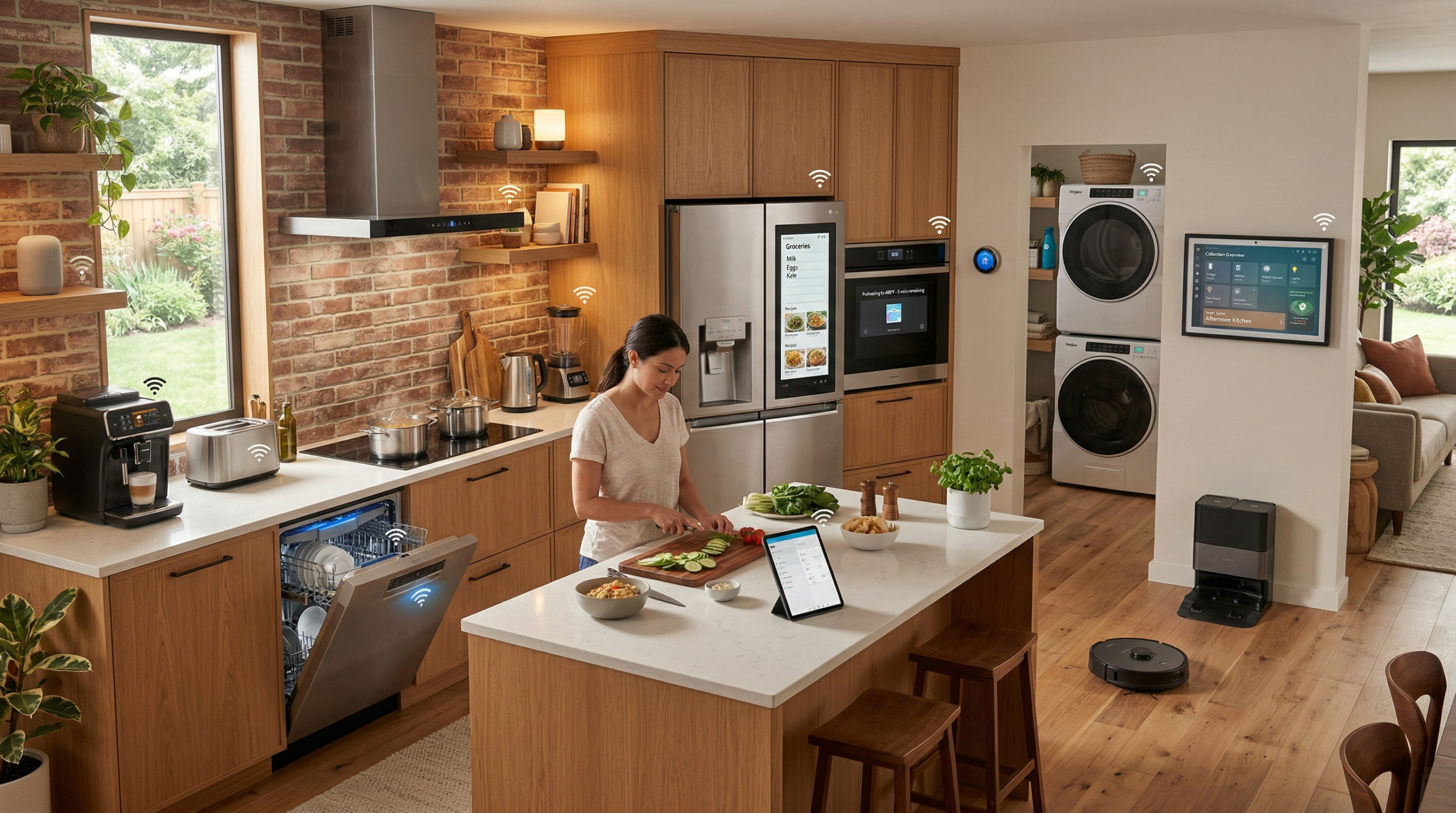
Make Your Kitchen Smarter
Smart kitchen appliances can simplify several everyday tasks. Depending on your budget, you might consider smart ovens, refrigerators, coffee makers, or kitchen timers.
A smart oven may allow you to monitor cooking progress through an app. Some models can send notifications when food reaches a certain temperature.
Smart coffee makers can schedule your morning brew. You can prepare the settings the night before and wake up to fresh coffee.
Smart appliances can provide convenience, but you should choose them carefully. A connected appliance should offer useful features rather than simply adding an internet connection to a basic product. Think about the tasks that consume your time. Then choose technology that actually reduces that effort.
Add Smart Plugs
Smart plugs offer an affordable way to make ordinary appliances smarter. You can connect lamps, fans, chargers, and other compatible devices to a smart plug. Once connected, you can control certain appliances through an app or voice command. You can also create schedules for devices that you use regularly. For example, you can schedule a lamp to turn on in the evening. You could also set a fan to operate during specific hours by technology ideas.
Smart plugs can also help you monitor energy use when the model supports that feature. Always check the electrical rating before connecting an appliance. High-power appliances may require equipment designed specifically for their electrical load.
Create a Smart Entertainment System
Entertainment systems can benefit from smart technology as well. A smart TV or streaming device can bring your favorite services together in one place.
You can also connect compatible speakers to create audio throughout your home. Voice assistants can make it easier to play music, adjust volume, or control compatible devices.
For a movie night, you could create a routine that dims the lights, adjusts the thermostat, and turns on your television with one command. The goal should involve simplicity. Avoid creating a complicated setup that requires several apps and remotes for basic tasks.
Use Smart Sensors Around the Home
Sensors can help your home respond to changing conditions. Motion sensors, door sensors, water-leak detectors, and temperature sensors can all serve different purposes.
A water-leak sensor can alert you when it detects moisture near a washing machine, water heater, sink, or other vulnerable area.Door and window sensors can notify you when someone opens an entry point.
Motion sensors can trigger lights when someone enters a room. They can also contribute to security routines. These small devices can provide useful information without requiring constant attention.
Automate Daily Routines
Automation represents one of the biggest advantages of a smart home. Instead of controlling every device individually, you can create routines that handle several actions together.
For example, a morning routine could turn on selected lights, adjust the thermostat, and start a coffee maker. An evening routine could lock compatible doors, turn off selected lights, and adjust the temperature.
You can also create an away routine. It might turn off unnecessary devices, activate security equipment, and adjust your thermostat. Start with one or two routines. Once you understand how automation works, you can gradually add more.
Choose a Smart Home Platform
Your devices need a way to communicate with one another. Therefore, think about compatibility before buying several products. Different brands may support different ecosystems and communication standards. Check whether new devices work with your preferred voice assistant, smartphone platform, or smart-home controller.
Buying compatible products can make future expansion much easier. You should also consider privacy. Review the permissions requested by each device and understand what information it collects. Change default passwords and enable additional account security whenever the manufacturer provides it.
Improve Energy Efficiency
Smart technology can help you understand and manage household energy use. Smart thermostats, plugs, lighting controls, and energy monitors can provide useful information. However, technology alone does not guarantee lower bills. Your habits still matter.
Turn off unnecessary lights. Adjust your thermostat when you leave home. Avoid running appliances when you do not need them. Use smart features as tools that support these habits.
Keep Your Smart Home Simple
A smart home should make daily life easier. It should not become another source of stress. Choose devices based on your needs. You do not need a smart version of every household item.
Start with one area, such as lighting or security. Learn how the system works before expanding. This approach makes troubleshooting easier and prevents unnecessary spending.
Most importantly, review your smart-home setup from time to time. Remove devices you no longer use and update software when necessary.
Final Thoughts
Building a smart home does not require a huge investment. You can start small and gradually add devices that provide genuine value. Smart lighting can improve convenience. Security devices can increase visibility around your property. Thermostats can help manage heating and cooling, while smart plugs and sensors can automate everyday tasks.
The best technology ideas focus on solving practical problems. Instead of buying gadgets simply because they look impressive, consider what would make your daily routine easier. As your needs change, you can expand your system. Just remember to prioritize compatibility, security, privacy, and ease of use.
A thoughtful smart-home setup should work quietly in the background. With the right technology, you can create a home that feels more convenient, efficient, comfortable, and connected without making everyday life unnecessarily complicated.