Businesses face growing competition every day. They also deal with rising customer expectations and increasing workloads. As a result, companies need smarter ways to improve efficiency without sacrificing quality. This is where artificial intelligence tools for business make a real difference.
Modern AI tools help organizations automate repetitive work, improve decision-making, and deliver better customer experiences. They also reduce manual effort and save valuable time. Instead of replacing employees, these tools support teams and allow them to focus on meaningful work.
Small businesses, startups, and large enterprises all benefit from AI technology. Marketing teams create better campaigns. Sales departments identify stronger opportunities. Customer support agents respond faster. Finance teams process data with greater accuracy. Meanwhile, managers gain valuable insights that help them make informed decisions.
Choosing the right AI solution may seem difficult because the market continues to grow rapidly. However, understanding the available options makes the process much easier. Every business has different goals, so selecting tools that match those objectives creates the best results.
Why Businesses Are Investing in AI
Artificial intelligence has become more accessible than ever. Companies no longer need massive budgets or dedicated research teams to use advanced technology. Instead, cloud-based AI platforms allow organizations of every size to take advantage of intelligent automation.
Businesses invest in AI because it improves productivity while reducing repetitive work. Employees spend less time on routine tasks and more time solving important problems. Consequently, companies increase efficiency without increasing workloads.
AI also improves accuracy. Many systems analyze large amounts of information in seconds. Therefore, businesses make faster decisions based on reliable data instead of assumptions.
Another major advantage involves customer satisfaction. AI-powered chatbots, recommendation engines, and automated support systems provide quicker responses. Customers appreciate fast service, which often leads to stronger loyalty and higher retention.
Top Artificial Intelligence Tools for Business
ChatGPT
ChatGPT remains one of the most versatile AI tools available today. Businesses use it for content writing, brainstorming, customer communication, documentation, and research. Teams also generate emails, reports, product descriptions, and social media content within minutes.
In addition, ChatGPT supports customer service by answering common questions and creating helpful responses. Many companies integrate it into their daily workflows to improve productivity across multiple departments.
Microsoft Copilot
Microsoft Copilot works directly inside Microsoft 365 applications. Employees create presentations faster, summarize meetings, analyze spreadsheets, and draft professional documents with minimal effort.
Since many organizations already rely on Microsoft products, Copilot fits naturally into existing workflows. As a result, businesses improve efficiency without changing their software environment.
Google Gemini
Google Gemini helps businesses generate content, analyze information, and improve collaboration. Teams working inside Google Workspace can quickly summarize documents, organize ideas, and manage projects more effectively. Furthermore, Gemini integrates with Google’s productivity ecosystem, making daily operations smoother for many organizations.
Jasper AI
Marketing teams frequently choose Jasper AI for content creation. The platform generates blog articles, advertising copy, email campaigns, and website content while maintaining a consistent brand voice. Companies also use Jasper to speed up content production without sacrificing quality. This allows marketing teams to publish more content in less time.
Canva AI
Visual content plays a major role in modern marketing. Canva AI simplifies graphic design by helping users create presentations, social media posts, advertisements, and promotional materials quickly. Even employees without design experience can produce professional-looking visuals. Therefore, businesses save both time and design costs.
AI Tools for Customer Support
Customer service remains one of the strongest applications of artificial intelligence. AI-powered assistants answer questions around the clock, reducing response times while improving customer satisfaction.
Chatbots handle common inquiries instantly. Meanwhile, human agents focus on complex issues that require personal attention. This balanced approach improves efficiency without reducing service quality. Many customer support platforms also analyze conversations. They identify common problems, recommend solutions, and help businesses improve future interactions.
AI for Marketing and Sales
Marketing departments rely heavily on data. Fortunately, AI transforms that information into practical insights. Businesses identify customer preferences, predict buying behavior, and personalize campaigns with greater accuracy.
Sales teams also benefit from intelligent recommendations. AI identifies promising leads and suggests the best opportunities to pursue. Consequently, representatives spend more time selling instead of searching for prospects.
Email marketing also becomes more effective with AI. Businesses generate personalized messages that match customer interests. Better personalization often leads to higher engagement and improved conversion rates.
AI Automation Improves Daily Operations
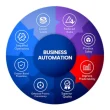
Many organizations lose valuable time performing repetitive administrative tasks. Artificial intelligence reduces this burden through workflow automation. Businesses automate appointment scheduling, document processing, data entry, invoice management, and internal notifications. Employees no longer repeat the same actions throughout the day. Instead, they focus on strategic work that creates greater value.
Automation platforms also connect multiple business applications. Information moves automatically between systems without manual updates. Consequently, operations become faster and more accurate.
Better Decision-Making with AI
Business leaders constantly make decisions that affect company growth. Artificial intelligence supports those decisions by analyzing large datasets within seconds. Instead of reviewing thousands of records manually, managers receive clear insights through dashboards and predictive analytics. These reports reveal trends, identify risks, and highlight new opportunities. As a result, organizations react faster to market changes and make smarter strategic decisions.
Improving Employee Productivity
Employees often spend hours searching for information, writing reports, or organizing documents. AI significantly reduces this workload. Modern AI assistants summarize meetings, organize notes, draft emails, and generate presentations automatically. They also answer internal questions quickly by searching company knowledge bases. This support allows employees to complete projects faster while maintaining high-quality work. Consequently, overall productivity continues to improve across departments.
Choosing the Right AI Solution
Every business has unique goals. Therefore, companies should identify their biggest challenges before selecting an AI platform. Some organizations prioritize customer service. Others focus on marketing, automation, or financial reporting. Choosing software that directly supports these priorities increases the chances of success. Businesses should also consider ease of use, integration capabilities, security standards, scalability, and ongoing support. Selecting a flexible solution ensures the software continues to meet future business needs.
Finally, organizations should introduce AI gradually. Employees adapt more easily when businesses implement one solution at a time instead of changing every process simultaneously.
Conclusion
Artificial intelligence continues to reshape the modern workplace. Businesses that embrace AI gain significant advantages in productivity, customer service, marketing, and decision-making. Instead of spending valuable time on repetitive tasks, teams focus on innovation, creativity, and business growth.
The best artificial intelligence tools for business help companies automate routine work, improve collaboration, and uncover valuable insights from data. They also create better customer experiences while supporting employees throughout their daily responsibilities.
As AI technology continues to evolve, businesses that invest in the right tools today will position themselves for long-term success. By choosing solutions that align with organizational goals, companies can improve efficiency, strengthen competitiveness, and build a smarter future.