



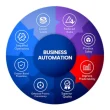


Modern businesses face increasing demands to deliver faster services, improve customer experiences, and operate more efficiently. As companies grow, repetitive tasks such as sending emails, managing customer data, processing invoices, scheduling appointments, and tracking projects consume valuable time that employees could spend on more strategic work. This is where automation becomes an essential part of business success. By automating routine processes, businesses can reduce errors, save time, and improve overall productivity.
Today, business automation tools help organizations of all sizes simplify daily operations without requiring large teams or complicated systems. From customer relationship management and marketing automation to accounting and workflow management, these tools allow businesses to work smarter rather than harder. This guide explains the benefits of business automation, explores the most important automation categories, and provides practical advice for choosing the right solutions for your organization.
What Are Business Automation Tools?
Business automation tools are software applications that perform repetitive tasks automatically with minimal human involvement. Instead of manually completing the same activities every day, businesses create automated workflows that handle routine operations based on predefined rules. These tools improve efficiency while reducing the likelihood of human error.
Automation can support almost every department within a business. Marketing teams automate email campaigns, sales teams track customer interactions, finance departments process invoices, and customer support teams manage inquiries more efficiently. As automation expands across different business functions, employees gain more time to focus on creative thinking, customer relationships, and strategic decision-making.
Why Business Automation Is Important
Automation improves business performance by reducing repetitive manual work and increasing operational efficiency. Employees spend less time performing routine administrative tasks and more time solving complex problems, developing new ideas, and serving customers. This shift improves productivity while creating a more satisfying work environment.
Another important advantage involves consistency. Automated processes follow predefined rules every time, reducing mistakes caused by manual data entry or inconsistent procedures. Businesses also benefit from faster response times, better organization, and improved customer satisfaction through more reliable operations.
Customer Relationship Management Automation
Organize Customer Information
Customer relationship management systems help businesses organize customer information, sales activities, and communication in one centralized location. Instead of managing customer records across multiple spreadsheets or applications, businesses maintain accurate and updated information within a single platform.
Automation also tracks customer interactions, records purchase history, and schedules follow-up activities automatically. This organized approach improves communication while helping sales teams build stronger relationships with customers.
Improve Sales Processes
Sales automation reduces repetitive administrative work by automatically assigning leads, sending follow-up reminders, and updating customer records. Sales representatives spend less time managing paperwork and more time building relationships with potential customers.
Automated sales pipelines also provide better visibility into every stage of the customer journey. Managers can monitor performance, identify opportunities, and make informed decisions using real-time information.
Marketing Automation
Marketing automation allows businesses to communicate with customers more effectively while reducing manual effort. Email campaigns, social media scheduling, customer segmentation, and lead nurturing can all operate automatically based on customer behavior or predefined schedules. This improves consistency while ensuring customers receive timely and relevant communication.
Businesses also use marketing automation to personalize customer experiences. Automated systems recommend products, deliver targeted promotions, and send follow-up messages based on previous interactions. These personalized campaigns often generate stronger engagement and higher conversion rates.
Project Management Automation
Managing projects becomes much easier when repetitive administrative tasks are automated. Project management tools assign tasks, update project timelines, notify team members about deadlines, and track progress automatically. Employees remain informed without requiring constant manual updates from managers.
Automation also improves collaboration across departments. Team members receive instant notifications when tasks change, documents are updated, or approvals are required. Better communication reduces delays while keeping projects moving forward efficiently.
Accounting and Financial Automation
Simplify Financial Processes
Accounting automation reduces the time required to manage invoices, payments, expense tracking, and financial reporting. Businesses can automatically generate invoices, record transactions, and reconcile accounts while reducing manual data entry. This improves accuracy and saves valuable administrative time.
Financial automation also provides better visibility into cash flow and business performance. Real-time financial reports help business owners make informed decisions while identifying opportunities to improve profitability.
Improve Payment Management
Automated payment reminders encourage customers to pay invoices on time while reducing the workload for accounting teams. Recurring billing, subscription management, and expense approvals also become more efficient through automation. These improvements strengthen financial management while supporting healthier cash flow.

Customer Support Automation
Customer service teams often handle repetitive inquiries regarding orders, account information, or common questions. Automation tools such as chatbots and automated ticketing systems provide immediate responses while directing more complex issues to human representatives. This combination improves response times and customer satisfaction.
Automated support systems also organize customer requests by priority, ensuring urgent issues receive attention quickly. Faster service creates better customer experiences while reducing pressure on support teams.
Human Resources Automation
Human resources departments benefit from automation through streamlined recruitment, employee onboarding, attendance tracking, and payroll management. Automated systems simplify document collection, interview scheduling, and employee record management while reducing paperwork.
HR automation also improves compliance by maintaining accurate records and ensuring important deadlines are not overlooked. Employees benefit from faster administrative processes while HR professionals gain more time for talent development and employee engagement.
Workflow Automation
Workflow automation connects different business applications to create efficient processes across departments. For example, a new customer inquiry can automatically create a sales opportunity, notify the appropriate employee, schedule follow-up activities, and update the customer database. These connected workflows eliminate unnecessary manual work while improving operational efficiency.
Businesses can automate approvals, notifications, document management, and reporting through customized workflows. As organizations grow, workflow automation becomes increasingly valuable for maintaining consistency across multiple teams.
Artificial Intelligence in Business Automation
Artificial intelligence has expanded the capabilities of modern business automation tools. AI analyzes customer behavior, predicts sales trends, generates reports, creates marketing content, and assists with customer support through intelligent chatbots. These advanced features help businesses make better decisions while improving productivity.
AI also automates repetitive knowledge-based tasks such as summarizing meetings, organizing documents, drafting emails, and analyzing large amounts of business data. By combining AI with traditional automation, businesses can operate more efficiently while focusing human expertise on strategic initiatives.
Choosing the Right Automation Tools
Selecting the right automation solution depends on your business size, industry, and operational needs. Begin by identifying repetitive tasks that consume the most time or frequently produce errors. Prioritize automation tools that solve these specific challenges while integrating smoothly with your existing software.
Ease of use, scalability, customer support, security, and pricing should also influence your decision. Choosing flexible tools allows your automation strategy to grow alongside your business without requiring major system changes later.
Common Mistakes to Avoid
Many businesses attempt to automate every process immediately, creating unnecessary complexity and confusion. A better approach is to automate one area at a time, evaluate the results, and expand gradually. This method allows employees to adapt while ensuring each workflow functions correctly.
Another common mistake is overlooking employee training. Even the most advanced automation tools require users to understand how they work. Providing proper training increases adoption while helping employees use automation effectively and confidently.
Conclusion
Modern business automation tools help organizations improve productivity, reduce manual work, strengthen customer relationships, and support long-term growth. From marketing and customer relationship management to accounting, project management, human resources, and AI-powered workflows, automation enables businesses to operate more efficiently while delivering better customer experiences.
Automation is not about replacing people. Instead, it allows employees to focus on higher-value activities that require creativity, critical thinking, and personal interaction. By choosing the right automation tools and implementing them strategically, businesses can build more efficient operations, increase profitability, and remain competitive in an increasingly digital business environment.


