






An electrical system should provide a safe and continuous supply of electricity. However, problems can occur because of damaged wiring, poor connections, overloaded circuits, or faulty electrical accessories. When these problems appear, a building electrician must identify the exact fault and repair it correctly.
Fault finding is one of the most valuable practical skills because it helps restore electrical systems without replacing unnecessary components. A skilled electrician can diagnose problems quickly, reducing repair time and improving the safety of the entire installation.
Understanding Electrical Faults
Electrical faults are problems that stop a circuit from working properly or create unsafe conditions. Some faults are easy to identify, while others require careful testing with electrical instruments.
A fault may affect a single switch, a single room, or the entire electrical system. The ability to understand how electricity flows through a circuit helps electricians locate the problem more efficiently.
A Professional Approach to Troubleshooting
Experienced electricians never repair an electrical system without first inspecting it. They begin by observing the symptoms, checking the distribution boards, and examining switches, sockets, and wiring connections.
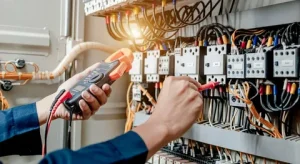
After the visual inspection, testing equipment is used to measure electrical values. These readings help determine whether the fault is caused by a damaged cable, loose connection, defective protective device, or faulty electrical accessory. Following a systematic troubleshooting process prevents unnecessary repairs and ensures accurate results.
Essential Testing Equipment
Professional fault finding depends on reliable testing tools. Every building electrician should know how to use these instruments safely before carrying out repairs.
The most frequently used equipment includes:
- Digital Multimeter: Measures voltage, current, and resistance across components.
- Clamp Meter: Measures electrical current without disconnecting wires.
- Voltage Tester: Checks for the presence of live electrical current.
- Continuity Tester: Verifies whether a complete electrical path exists.
- Insulation Resistance Tester (Megger): Evaluates the integrity of cable insulation.
- Test Lamp: Provides a visual check for circuit power.
Each instrument performs a different function and helps electricians locate electrical faults with greater accuracy.
Common Types of Electrical Faults
Building electricians commonly encounter several types of faults during maintenance work:
- Short Circuit: Occurs when live conductors come into direct contact with neutral or earth conductors, causing a sudden increase in current. Circuit breakers usually disconnect the supply immediately to prevent damage.
- Open Circuit: Happens when the electrical path is broken by a damaged wire, a faulty switch, or a disconnected terminal. Since the circuit is incomplete, electricity cannot reach the connected appliance.
- Earth Fault: Occurs when electrical current flows unintentionally to the earth because of damaged insulation or faulty equipment. Proper earthing systems and RCCBs help protect people from electric shock in these situations.
- Voltage Drop: Another common electrical issue where long cable runs, overloaded circuits, or undersized conductors reduce the voltage reaching electrical equipment, affecting motors, lighting systems, and electronic devices.
Understanding these different fault types helps electricians choose the correct testing method and repair procedure.
Common Causes of Electrical Faults
Electrical faults can occur for many different reasons. Some develop because electrical systems become old, while others result from poor workmanship or incorrect installation.
- Loose Electrical Connections: Over time, screws inside switches, sockets, and distribution boards may become loose because of vibration or continuous use. Loose connections increase resistance, generate heat, and may eventually damage electrical components.
- Damaged Cable Insulation: Heat, moisture, rodents, or physical damage can weaken insulation, allowing electrical current to leak or create short circuits.
Repair Methods Used by Building Electricians
After identifying the problem, the repair work begins. The electrician removes damaged components, replaces faulty parts, tightens loose terminals, and restores damaged wiring where necessary.
Every repair must follow electrical safety standards. Once the work is completed, the circuit is tested again to confirm that the fault has been removed and the electrical system is operating normally.
Developing Strong Practical Skills
Electrical fault finding is a skill that improves with practical experience. Working on different electrical systems allows electricians to understand how faults develop and how they can be repaired efficiently.
Practical training includes diagnosing wiring problems, testing protective devices, checking circuit continuity, measuring voltage, and repairing electrical accessories. These activities prepare learners to handle real maintenance work with confidence.
The Value of Preventive Inspection
Many electrical failures can be prevented before they interrupt the power supply. Regular inspection of wiring systems, distribution boards, switches, sockets, and protective devices helps identify small problems at an early stage.
Preventive maintenance improves electrical safety, reduces repair costs, increases equipment life, and ensures that buildings continue to receive a reliable power supply.
Building a Successful Career Through Troubleshooting Skills
Electrical fault finding and repair are essential responsibilities of every building electrician. The ability to inspect, test, diagnose, and repair electrical systems makes an electrician more skilled and dependable.
With continuous practical experience and a good understanding of electrical circuits, building electricians can work on residential, commercial, and industrial projects while providing safe, efficient, and professional electrical maintenance services.


